Art in the Heart of the Wild: How the Amazon Inspires a Different Kind of Gallery
You know that feeling when nature and creativity collide in the most unexpected way? That’s exactly what I found in the Brazilian Amazon. Forget white-walled galleries—here, art lives in the trees, breathes through music, and pulses in handmade crafts. I never expected to call a rainforest an art space, but it is. Let me take you through a journey where every sense is part of the exhibition. This is art, raw and alive.
The Amazon as a Living Canvas
The Brazilian Amazon is not just the largest tropical rainforest on Earth—it is also the most vivid expression of natural artistry. Spanning over five million square kilometers across nine countries, its heart beats strongest in Brazil, where the Rio Negro and Amazon River converge in a symphony of dark and light waters. The forest is a living canvas, painted with emerald canopies, golden sunsets that filter through misty mornings, and flashes of cobalt from macaws in flight. The air hums with cicadas, frog calls, and the distant rustle of howler monkeys—a rhythm section composed over millennia. This is not scenery; it is a sensory masterpiece.
For the indigenous communities who have lived here for thousands of years, the Amazon is far more than a habitat. It is a source of inspiration, a spiritual guide, and a creative collaborator. Art does not begin with a blank page or a lump of clay—it begins with observation, with listening to the forest’s subtle messages. The way a vine spirals up a tree, the pattern of bark on a kapok, the dance of light on the river—these are the original sketches from which all cultural expression grows. In this worldview, every element of nature holds meaning, and creativity is not separate from survival but woven into it.
What makes the Amazon a true gallery is that it redefines what art can be. There are no frames, no curators, no opening nights—yet the experience is more immersive than any museum. Visitors who come with open eyes and quiet hearts quickly realize they are walking through a living exhibition. The forest teaches patience, respect, and wonder. It asks not to be owned but to be understood. And in that understanding, a new kind of artistic awareness emerges—one rooted in harmony, balance, and reverence for life in all its forms.
Indigenous Art: Culture Expressed Through Craft
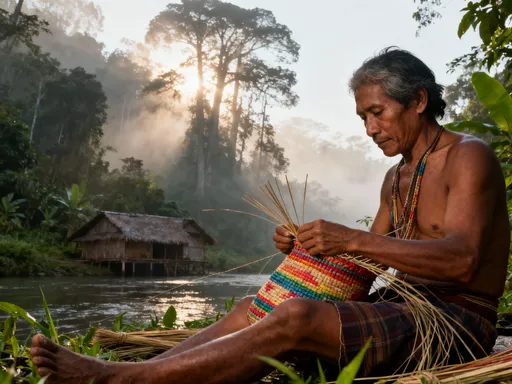
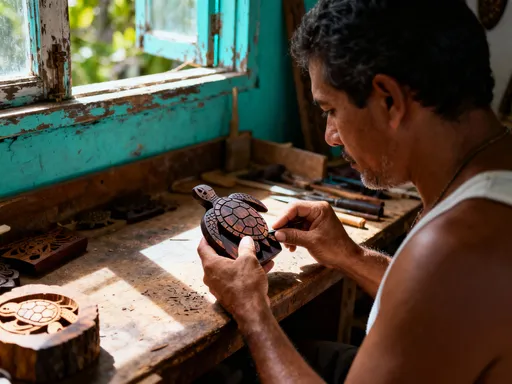
Among the most profound expressions of Amazonian creativity are the crafts passed down through generations of indigenous families. These are not souvenirs made for tourists; they are cultural records, spiritual symbols, and daily tools transformed into beauty. From the intricate basket weaving of the Tikuna people to the vibrant feather headdresses of the Yanomami, each piece carries deep meaning. The patterns are not random—they speak of ancestral stories, natural cycles, and cosmological beliefs. A zigzag may represent a serpent spirit; concentric circles might symbolize ripples of creation; red and black dyes often reflect the duality of life and the earth.
Materials are sourced with intention and care. Palm fibers, seeds, natural pigments, and sustainably gathered feathers are transformed through skilled hands into objects of both utility and artistry. Basket weaving, for example, is not only an artistic practice but a demonstration of ecological knowledge. Artisans know which palms regenerate quickly, which dyes come from which roots, and how to harvest without harming the plant. This deep connection to the environment ensures that creativity supports conservation rather than depletes it.
What stands out most is the authenticity of these works. Unlike mass-produced imitations sold in urban markets, genuine indigenous crafts are made slowly, with ritual and respect. Each item may take days or weeks to complete, and every stitch, twist, or feather placement is deliberate. When travelers purchase directly from artisans—through community cooperatives or fair-trade initiatives—they are not just acquiring art; they are supporting cultural continuity and environmental stewardship. In this way, art becomes a bridge between worlds, a quiet act of resistance against cultural erosion and ecological loss.
Community Art Centers: Where Tradition Meets Expression
Across the Amazon, especially in regions near Manaus and along the banks of the Rio Negro, community-led art centers have emerged as vital spaces for cultural preservation and exchange. These are not commercial galleries but living workshops where elders teach youth, and visitors are welcomed as respectful observers. Run by indigenous associations or cultural cooperatives, these centers serve multiple roles: they are classrooms, studios, and marketplaces where tradition is kept alive through daily practice.
In these spaces, travelers can witness the creation of art in real time. An elder might demonstrate how to weave a ceremonial basket using techniques unchanged for centuries. A young artisan could be painting intricate designs on calabash gourds, explaining how each symbol connects to their people’s origin story. Some centers offer hands-on workshops, allowing guests to try their hand at simple weaving or natural dyeing under guidance. These experiences go beyond tourism—they foster connection, understanding, and mutual respect.
One of the most impactful aspects of these centers is their role in economic empowerment. By selling crafts directly to visitors or through ethical partnerships, communities gain financial independence while maintaining control over their cultural heritage. This model contrasts sharply with exploitative markets where middlemen profit while artisans receive little. When travelers choose to engage with these authentic spaces, they help ensure that art remains a source of pride and sustainability rather than commodification.
Accessibility varies, but many centers are reachable via guided river trips from Manaus or through stays at nearby eco-lodges. The journey itself becomes part of the experience—gliding through flooded forests, hearing bird calls, and arriving at a village where art is not displayed behind glass but lived in every gesture and object. These centers are quiet revolutions, proving that cultural expression can thrive when rooted in community, respect, and self-determination.
Music and Performance: The Soundtrack of the Rainforest
If the Amazon has a soundtrack, it is one composed of breath, rhythm, and memory. Traditional music here is not entertainment; it is ceremony, prayer, and storytelling. Instruments are made from the forest itself—wooden flutes carved from fallen branches, drums stretched with animal hide, rattles filled with seeds or pebbles. Each sound is chosen not only for its tone but for its origin. A flute made from a specific tree may be used only in certain rituals; a rattle’s rhythm might mimic the footsteps of a spirit ancestor.
Ceremonial dances are equally profound. Performed during festivals, rites of passage, or seasonal celebrations, these dances combine movement, costume, and music into a unified expression of identity. Dancers adorned with feathered headdresses and body paint move in patterns that tell stories of creation, hunting, or the journey of the soul. The rhythm is not counted in beats per minute but in heartbeats aligned with the forest’s pulse. Elders often lead these performances, ensuring that the knowledge is passed to younger generations with accuracy and reverence.
What makes this musical tradition so powerful is its continuity. Despite pressures from modernization and cultural assimilation, many communities continue to practice and teach their musical heritage. Some have even begun sharing it selectively with outsiders through cultural presentations designed to educate rather than perform for spectacle. These moments are not staged for convenience; they are invitations into a deeper understanding of a people’s relationship with the world around them.
For visitors, experiencing this music is transformative. It shifts the perception of art from something to be observed to something to be felt. The vibrations of a drum resonate in the chest; the high pitch of a flute echoes like a bird call; the collective rhythm of dancers moves through the ground. In these moments, the boundary between audience and performer dissolves. One does not watch the art—they become part of it, if only for a few sacred minutes.
Eco-Art Installations: Nature-Inspired, Forest-Integrated
In recent years, a new form of artistic expression has emerged in the Amazon: eco-art installations that exist in harmony with the forest rather than in opposition to it. These are not permanent sculptures or monuments, but temporary works created from fallen wood, vines, leaves, and other natural materials that would otherwise decompose. Artists—both local and international—collaborate with indigenous communities to create pieces that reflect the spirit of the rainforest without harming it.
One such project involved weaving large spirals from dried liana vines along a riverbank, their shape echoing the growth patterns of plants and the movement of water. Another used hundreds of seed pods arranged in mandala-like patterns on the forest floor, visible only from above. These installations are not meant to last. Rain, wind, and time return them to the earth, completing a cycle of creation and decay that mirrors nature’s own rhythms. Their impermanence is part of their message: beauty does not need to endure to be meaningful.
What sets these works apart is their intentionality. Unlike industrial art that extracts and consumes, eco-art gives back by drawing attention to the forest’s fragility and resilience. Many projects include guided walks where artists and community members explain the concepts behind the pieces, turning the experience into both an aesthetic and educational journey. These collaborations often result in deeper cultural exchange, with artists learning from indigenous ecological knowledge and communities gaining new ways to express their values.
Crucially, these installations leave no trace. No nails, no paint, no synthetic materials. They are built with the forest’s consent, so to speak—using only what is already on the ground. This approach reflects a philosophy central to Amazonian worldviews: that humans are not masters of nature but participants in it. By creating art that honors this principle, eco-artists offer a powerful model for sustainable creativity—one that could inspire similar movements around the world.
Art as Conservation: Beauty with a Purpose
Perhaps the most profound role of Amazonian art is its power to protect. In a region facing relentless threats from deforestation, mining, and climate change, cultural expression has become a tool for conservation. When a basket is sold at a fair-trade market, part of the proceeds often goes directly to community-led forest patrols or reforestation projects. When a dance is performed for visitors, it carries with it a message about the sacredness of the land. Art, in this context, is not separate from activism—it is activism in its most enduring form.
Studies have shown that communities with strong cultural preservation programs are more likely to maintain forest cover. When people value their traditions, they are more motivated to protect the environment that sustains them. This is not a coincidence but a direct relationship between cultural identity and ecological health. Art becomes a living argument for why the Amazon must be saved—not just for its biodiversity, but for the human cultures that have coexisted with it for generations.
International attention has also amplified this impact. Exhibitions of Amazonian crafts in global museums, documentaries featuring indigenous music, and collaborations with environmental NGOs have brought wider recognition to the region’s cultural wealth. This visibility helps shift narratives—from seeing the Amazon as a resource to be exploited to recognizing it as a cradle of human creativity and ecological wisdom.
Supporting this art is, therefore, a form of environmental stewardship. Every purchase made from a local artisan, every workshop attended, every photo shared with credit and context contributes to a larger movement. It says: this culture matters. This forest matters. And the art that emerges from their union is not just beautiful—it is necessary.
How to Experience Amazon Art Responsibly
For those drawn to experience the art of the Amazon firsthand, the most important principle is respect. This begins with choosing ethical travel options—tours led by indigenous guides, stays at community-run eco-lodges, and visits coordinated through cultural cooperatives. These choices ensure that benefits go directly to the people whose lives and traditions are being shared. Avoid operators who promise “exclusive” or “untouched” experiences, as these often exploit or misrepresent communities.
When visiting sacred spaces or participating in cultural events, follow local guidance. Ask before taking photographs. Dress modestly if requested. Listen more than you speak. Understand that some ceremonies are not for public viewing and should never be pressured into performance. Authenticity cannot be demanded; it must be offered freely.
The best time to visit is during the dry season, from June to November, when river levels are lower and trails are more accessible. Travelers typically fly into Manaus and then take guided riverboats or small aircraft to remote communities. While the journey may be long, it allows time to adjust, reflect, and prepare mentally for the transition into a different way of life.
Slow travel is key. Rushing through a village to “see the art” reduces a complex culture to a checklist. Instead, stay longer, engage in conversation, learn a few words in the local language, and allow relationships to form naturally. When you do purchase art, buy directly from the maker, ask about the story behind the piece, and pay a fair price. Carry your purchases with pride, knowing they represent not just beauty but resilience.
Finally, continue the conversation after you return home. Share what you’ve learned—not just through photos, but through stories that honor the people and places you encountered. Advocate for policies that protect indigenous rights and rainforest conservation. In doing so, you extend the life of the art far beyond the forest, turning a personal experience into a lasting commitment.
Conclusion
The Brazilian Amazon isn’t just a destination—it’s a masterpiece in motion. Its art spaces aren’t confined by walls; they stretch across rivers, echo in songs, and live in the hands of those who shape culture daily. By experiencing this art with respect and curiosity, we don’t just witness beauty—we help sustain it. Every basket, every drumbeat, every feathered dance is a testament to a worldview that sees creativity not as separate from nature but as its most authentic expression. In a world increasingly defined by speed and artificiality, the Amazon offers a different rhythm—one of depth, connection, and enduring truth. To walk through its living gallery is to remember that the most powerful art is not made to be sold, but to be lived.