Whispers of Heritage: Inside Kuwait City’s Hidden Art Soul
Kuwait City pulses with quiet cultural power—where tradition meets modern expression in galleries, souks, and seaside murals. Far from the glitz of skyscrapers, local artists preserve identity through bold creativity. I discovered a side of Kuwait few travelers see: intimate, authentic, and deeply rooted. This is not just a city of oil and finance. It’s a living canvas. And its story is waiting to be felt. Beneath the shimmering towers and bustling boulevards lies a creative current, steady and purposeful, shaping a national identity that honors the past while embracing the future. Art in Kuwait City is not confined to white-walled galleries—it flows through alleyways, echoes in the call of the muezzin near historic mosques, and lingers in the scent of sandalwood and aged leather in centuries-old markets. This is a city where heritage is not preserved behind glass, but lived, worn, and reimagined daily.
Unveiling the Cultural Pulse Beneath the Surface
Kuwait City’s skyline, marked by sleek towers and reflective glass, often dominates the traveler’s first impression. Yet beneath this modern exterior beats a cultural heart that few pause to explore. The city’s economic success, built on decades of stability and global trade, has quietly funded a renaissance in the arts—one that is neither flashy nor commercial, but deeply intentional. Government and private institutions alike have recognized that a nation’s wealth is not measured only in currency, but in the richness of its cultural legacy. As a result, Kuwait has invested in spaces where heritage and innovation converge, creating environments where art is not a luxury, but a necessity.
One of the most significant expressions of this cultural commitment is the Sheikh Abdullah Al-Salem Cultural Centre, one of the largest museum complexes in the world. Spread across six pavilions, the centre houses exhibits on natural history, science, space, and Islamic civilization, but its true impact lies in how it presents Kuwaiti identity as part of a broader human story. The architecture itself—clean lines, open courtyards, and shaded walkways—invites contemplation. Inside, interactive displays and curated artifacts connect visitors to the region’s ecological and historical roots, emphasizing sustainability and knowledge as core values. The centre does not merely educate; it inspires a sense of belonging and continuity.
Public art plays an equally vital role in reshaping the city’s identity. Along the Corniche, where the Arabian Gulf meets the city’s edge, sculptures and installations reflect both maritime heritage and contemporary thought. A bronze dhow sail catches the afternoon light; a mosaic of traditional patterns weaves into a modern bench. These elements are not decorative afterthoughts—they are deliberate acts of cultural affirmation. They signal that Kuwait City is not defined solely by its economic output, but by its people’s creativity and resilience. Local artists are increasingly commissioned for such projects, ensuring that public spaces remain authentic reflections of national character.
Support for the arts extends beyond physical spaces. Cultural grants, artist residencies, and mentorship programs have grown steadily over the past decade, fostering a new generation of Kuwaiti creatives. These initiatives are often led by private foundations in partnership with the Ministry of Culture, demonstrating a shared vision for cultural sustainability. While the international art world may still overlook Kuwait in favor of larger regional hubs, those who look closely will find a vibrant, self-sustaining ecosystem—one that values depth over spectacle and meaning over trend.
The Souk as a Living Gallery: Tradition Meets Craft
If Kuwait City’s soul has a heartbeat, it can be found in Souk Al-Mubarakiya, one of the oldest and most enduring markets in the Gulf. More than a place to shop, the souk functions as a living gallery, where every stall tells a story passed down through generations. The air is thick with the scent of oud, cardamom, and freshly ground coffee. Sunlight filters through palm-thatch roofs, casting dappled shadows on handwoven textiles and polished brass. This is not a tourist reconstruction—it is a working marketplace, alive with the rhythm of daily life and the quiet pride of artisans who see their craft as both livelihood and legacy.
The sadu weaving tradition stands as one of the most iconic forms of Kuwaiti artistic expression. Practiced historically by Bedouin women, sadu involves intricate geometric patterns woven into wool, often in deep reds, blacks, and creams. These designs are not merely decorative; they carry symbolic meanings—tribal identity, protection, and the passage of time. Today, sadu is preserved through cooperatives like the Al Sadu Society, where master weavers train younger generations in traditional techniques. Visitors can observe the process up close, from the spinning of wool to the final woven panels used in cushions, wall hangings, and ceremonial garments. The society also collaborates with contemporary designers, integrating sadu motifs into modern fashion and interior design, ensuring the craft remains relevant.
Equally significant is the art of dhow woodworking, a maritime tradition that dates back centuries. In the old shipbuilding districts near Shuwaikh Port, craftsmen still shape teak and oak into elegant sailing vessels using hand tools and time-honored methods. The curved hulls, hand-carved prows, and intricate rope work reflect a deep understanding of both function and beauty. Though few dhows sail for trade today, the craft endures as a symbol of Kuwait’s seafaring past. Some workshops now offer guided visits, allowing guests to witness the precision and patience required to build these floating works of art. The scent of sawdust and marine varnish lingers in the air—a sensory echo of a bygone era.
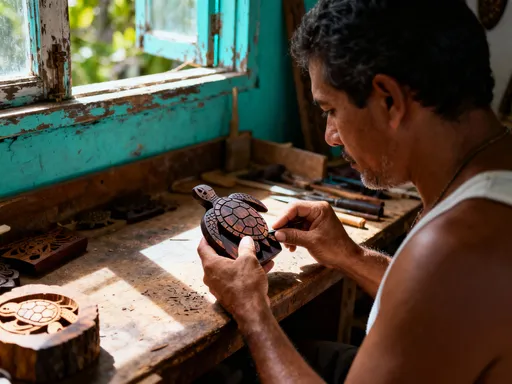
Artisan stalls throughout the souk also showcase other traditional crafts: hand-blown glass from Iran and India, intricately inlaid wooden boxes, and silver jewelry with Islamic calligraphy. Each piece carries the mark of its maker, often with subtle variations that reflect personal style. Bargaining is part of the ritual, not as a transaction, but as a form of social exchange—a dance of respect and mutual understanding. To walk through Souk Al-Mubarakiya is to move through layers of history, where commerce and culture are inseparable, and every purchase becomes an act of preservation.
Modern Galleries and the Rise of Contemporary Kuwaiti Art
While traditional crafts anchor Kuwait’s artistic identity, a new wave of contemporary expression is gaining momentum in the city’s galleries and cultural spaces. Kuwaiti artists are increasingly using modern mediums—painting, sculpture, digital art, and mixed media—to explore themes of memory, identity, and environmental change. Their work is not a rejection of tradition, but a dialogue with it—a way of asking how heritage lives in a globalized, rapidly changing world. This evolution is supported by institutions like Dar al-Athar al-Islamiyyah, a pioneering cultural organization founded in the 1980s that continues to champion both classical and contemporary Islamic art.
Located in a restored mansion in Kuwait City, Dar al-Athar houses an extensive collection of Islamic artifacts, including manuscripts, ceramics, and metalwork. But its true significance lies in its programming. The institution regularly hosts exhibitions that pair historical pieces with modern interpretations, creating a visual conversation across time. One recent exhibit, for example, displayed 12th-century calligraphy alongside digital animations that reimagined the same verses in motion. Another featured contemporary Kuwaiti painters who used traditional arabesque patterns as the foundation for abstract compositions exploring themes of displacement and belonging. These juxtapositions do not dilute the past—they illuminate it, showing how ancient forms can inspire modern meaning.
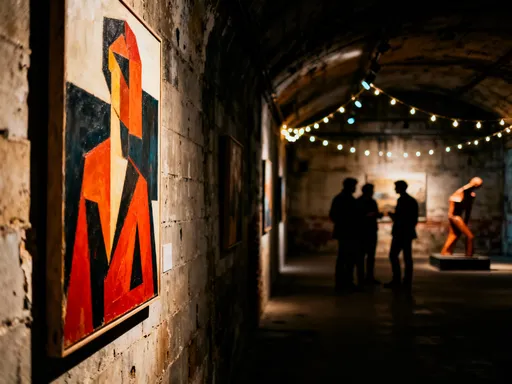
Private galleries and pop-up exhibits have also emerged as vital platforms for emerging artists. Spaces like Aseela and The Fire Station (formerly a working firehouse turned arts center) provide affordable studios and exhibition opportunities for young creatives. These venues are often experimental, hosting everything from performance art to interactive installations. One notable exhibit used soundscapes of Kuwaiti seashores and desert winds to explore the impact of climate change on the region’s natural landscapes. Another featured portraits of elderly Kuwaitis, painted in hyperrealistic detail, accompanied by audio recordings of their life stories. These works do not shout for attention—they invite quiet reflection, encouraging viewers to listen, remember, and feel.
What unites much of this contemporary work is a deep respect for cultural roots, even as it pushes boundaries. Artists rarely seek to shock or provoke; instead, they aim to connect—to themselves, their families, and their community. Their work is often introspective, drawing on personal memories of childhood homes, family gatherings, and the changing cityscape. This emotional authenticity resonates with local audiences and offers international visitors a rare glimpse into the inner life of a nation often misunderstood.
Street Art and the Voice of the Youth
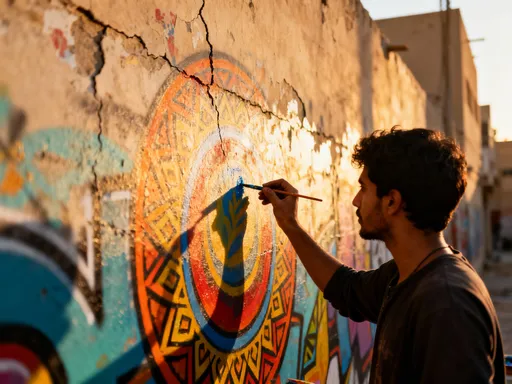
Just beyond the curated walls of galleries, Kuwait City’s streets tell another story—one of youthful energy, quiet rebellion, and creative resilience. In neighborhoods like Sharq, Faiha, and Salmiya, vibrant murals and stenciled graffiti adorn building facades, underpasses, and public walls. These works are not acts of vandalism, but sanctioned expressions of identity and aspiration. Supported by municipal art initiatives and youth programs, street art in Kuwait has become a legitimate medium for storytelling, one that transforms overlooked urban spaces into open-air galleries.
The themes of these murals are varied but often center on nostalgia, national pride, and everyday life. One striking piece in Salmiya depicts a child flying a kite shaped like a traditional dhow, soaring above a skyline of modern towers. Another, near a school in Faiha, shows a young girl in a thobe reading a book beneath a palm tree, her shadow forming the shape of Kuwait’s map. These images do not critique society—they celebrate it, while gently questioning what is being preserved and what is being lost. There is a poetic subtlety to the messaging, a refusal to oversimplify complex emotions.
Young artists walk a careful line between expression and cultural respect. In a conservative society, overt political or social commentary is rare. Instead, they use metaphor, symbolism, and personal narrative to convey deeper meanings. A mural of a single oud left on a bench might evoke the absence of a loved one; a series of fading footprints in the sand could represent the erosion of tradition. These works are not loud—they are whispered, meant to be discovered rather than announced. They reward attention, inviting passersby to pause, interpret, and feel.
The city’s support for street art reflects a broader shift in how culture is valued. Rather than confining art to elite spaces, Kuwait is embracing its role in public life. Murals are regularly commissioned for festivals, schools, and community centers, ensuring that art remains accessible to all. Walking tours led by local guides now include street art stops, helping visitors understand the stories behind the images. For many Kuwaiti youth, these walls are not just surfaces to paint—they are platforms to be seen, to contribute, and to belong.
Architecture as Art: From Brutalism to Islamic Revival
To understand Kuwait City’s artistic soul, one must look not only at its galleries and streets, but at its buildings. Architecture here is more than function—it is a form of cultural dialogue, a visual language that speaks of identity, values, and aspirations. The city’s skyline is a mosaic of styles: sleek glass towers, geometric Islamic designs, and bold examples of Brutalist architecture. Each structure tells a story, not just of aesthetics, but of historical moment and philosophical intent.
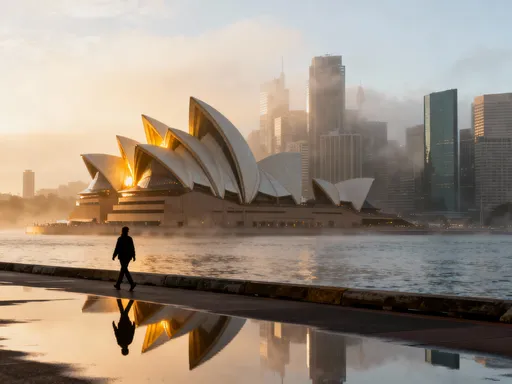
One of the most iconic examples is the Kuwait National Assembly building, designed by Danish architect Jørn Utzon, best known for the Sydney Opera House. Completed in 1982, the building features sweeping concrete curves and a central dome inspired by traditional desert forts. The interior is equally striking, with natural light filtering through intricate mashrabiya screens and water channels symbolizing the flow of democracy. Utzon’s design masterfully blends modernist principles with regional forms, creating a space that feels both futuristic and timeless. It stands as a testament to Kuwait’s desire to be both globally connected and culturally grounded.
In contrast, the Al-Kazim Mosque in Kuwait City exemplifies the elegance of Islamic architectural revival. Its twin minarets rise gracefully above the neighborhood, adorned with turquoise tiles and delicate calligraphy. The prayer hall is illuminated by stained glass windows depicting floral and geometric patterns, casting colorful reflections on the marble floor. Every element—from the placement of the mihrab to the acoustics of the dome—is designed to enhance spiritual experience. The mosque is not just a place of worship; it is a work of art that invites contemplation and reverence.
Other buildings, like the Kuwait Towers, blend utility and symbolism. The three spherical tanks, connected by skybridges, serve as water reservoirs but also as landmarks of national pride. At night, they are illuminated with changing colors, sometimes reflecting seasonal celebrations or national events. Their design, inspired by Islamic art and modern engineering, has made them an enduring symbol of the city. Together, these structures form an open-air museum, where architecture becomes a silent curator of cultural memory.
Festivals and Cultural Moments That Bring Art to Life
While galleries and streets offer daily encounters with art, Kuwait City truly comes alive during its cultural festivals—especially the annual Hala February Festival. For four weeks, the city transforms into a celebration of heritage, creativity, and community. Streets are strung with lights, public squares host live performances, and cultural centers open their doors to visitors from all walks of life. Hala is not a single event, but a constellation of activities—art exhibitions, music concerts, food fairs, and craft markets—that invite both locals and tourists to participate in the living culture of Kuwait.
One of the festival’s highlights is the open-air art exhibitions, often held in parks or along the Corniche. Local artists display paintings, sculptures, and installations, many of which respond to themes of identity, environment, and tradition. Visitors can speak directly with the artists, learning about their inspirations and techniques. Calligraphy workshops allow guests to try their hand at Arabic script, guided by master scribes who explain the spiritual and aesthetic dimensions of the art. Traditional dance performances, featuring the ardah and other folk styles, bring rhythm and movement to the celebrations, connecting audiences to the physical expressions of cultural pride.
What makes Hala special is its inclusivity. Families gather on picnic blankets, elders share stories with grandchildren, and children run between exhibits, wide-eyed with curiosity. The festival does not separate art from life—it integrates them, showing that culture is not something to be observed from a distance, but lived and shared. Food stalls offer regional specialties—machboos, mutabbaq, and qahwa—adding another sensory layer to the experience. The warmth of community engagement is palpable, a reminder that art, at its best, is a collective act of belonging.
Other events throughout the year, such as the Kuwait International Biennial and the Gulf Craft Festival, further enrich the cultural calendar. These gatherings attract artists and visitors from across the region, fostering dialogue and collaboration. They also provide platforms for lesser-known creatives to gain recognition, ensuring that the art scene remains dynamic and diverse. For travelers, timing a visit to coincide with these festivals offers a rare opportunity to witness Kuwait’s creative spirit in full bloom.
How to Engage: A Traveler’s Guide to Meaningful Cultural Connection
To truly experience Kuwait City’s artistic depth, one must move beyond the surface. This is not a destination for hurried sightseeing, but for mindful exploration. The rewards come not from checking off landmarks, but from slowing down, observing details, and engaging with people. The first step is timing: visiting during cultural festivals like Hala February ensures access to a wide range of events and a lively atmosphere. Even outside festival season, many galleries and cultural centers offer guided tours, workshops, and artist talks that deepen understanding.
Respect is essential. While Kuwait is welcoming, it is also a conservative society. Dressing modestly, especially when visiting religious or traditional spaces, shows consideration for local norms. Photography should be done with permission, particularly when capturing people or private spaces. Engaging with local guides—especially those from cultural organizations or artist cooperatives—can provide insights that no guidebook can offer. These individuals often share personal stories, historical context, and behind-the-scenes access that enrich the experience.
Supporting local artisans is another meaningful way to connect. Purchasing handmade sadu textiles, hand-carved wooden boxes, or original artworks directly from cooperatives or souk vendors ensures that cultural traditions continue to thrive. Many artisans welcome conversation, and a few minutes of genuine interest can lead to lasting memories. Visiting community art centers or attending public workshops allows travelers to participate, not just observe, turning tourism into a reciprocal exchange.
Finally, embrace the pace. Kuwait City’s art is not loud or aggressive—it is subtle, layered, and often hidden in plain sight. A mural on a side street, the pattern on a prayer rug, the curve of a mosque’s dome—these details accumulate into a deeper understanding. Travelers who approach with curiosity and humility will find a city that reveals itself slowly, like a story whispered over time.
Beyond the Expected – A City Reimagined Through Art
Kuwait City is often seen as a waypoint, a modern metropolis defined by wealth and commerce. But those who look closer discover something more profound: a city reimagining itself through art. Its creativity is not in the glare of neon signs, but in the quiet persistence of a weaver’s hands, the brushstroke of a young painter, the curve of a mosque’s arch. This is a culture that does not shout, but speaks in whispers—of memory, identity, and belonging.
To travel here is to move beyond stereotypes, to witness how a nation preserves its soul amid rapid change. Art in Kuwait City is not separate from life—it is woven into it, in the markets, the streets, the festivals, and the homes. It invites not just observation, but participation. It asks visitors to slow down, to listen, to feel. And in that stillness, one discovers a truth often overlooked: that the richest destinations are not measured in landmarks, but in moments of connection. Kuwait City, in all its quiet brilliance, is not just a place to visit—it is a story waiting to be felt.