You Won’t Believe What Lahore’s Culture Hides in Plain Sight
Lahore pulses with stories, colors, and centuries of history echoing through its alleys. As Pakistan’s cultural heart, it doesn’t just preserve tradition—it lives it. From Mughal-era grandeur to vibrant street art, every corner offers a glimpse into a rich, layered identity. I walked its historic lanes, felt the warmth of its people, and discovered cultural gems that transformed my understanding of South Asian heritage. This is more than sightseeing—it’s soulful immersion. The city breathes through its architecture, cuisine, music, and daily rituals, offering travelers not just sights to see, but emotions to feel and memories to carry. In a world where authenticity often feels lost, Lahore remains refreshingly real.
The Soul of Lahore: Why Culture Lives in Every Stone
Lahore is not a museum piece preserved behind glass—it is a living, breathing testament to South Asia’s cultural continuity. As the cultural capital of Pakistan, it carries the weight of empires, the rhythm of poetry, and the warmth of communal life. The city’s identity has been shaped over centuries by Mughal rulers, Sikh sovereigns, and British administrators, each leaving an indelible mark on its streets, buildings, and traditions. Yet, unlike other historic cities where the past is carefully curated, Lahore wears its history casually, like a well-loved shawl passed down through generations. Culture here isn’t something you schedule a visit to see—it unfolds naturally, in the laughter of children playing near ancient gates, in the calligraphy adorning tea stalls, and in the rhythms of qawwali music drifting from neighborhood shrines.
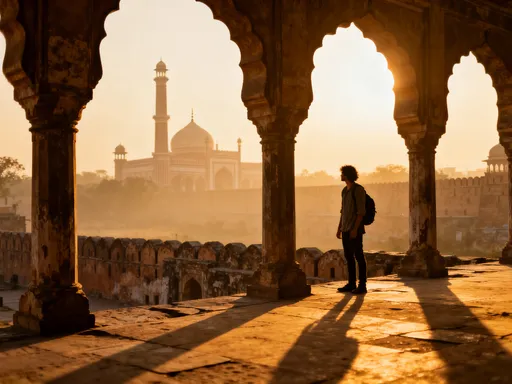
What makes Lahore unique is the seamless blend of old and new. You can stand beneath a 17th-century Mughal archway while a young couple sips coffee at a modern café just steps away. A rickshaw painted with floral motifs and Quranic verses weaves through traffic beside luxury cars. This coexistence isn’t forced—it’s organic, a reflection of a society that honors its roots while embracing change. The city’s pulse is chaotic, yes, but within that chaos lies a kind of poetry. The honking of horns, the sizzle of street food, the call to prayer echoing from minarets—all form a symphony that defines daily life. To understand Lahore, one must listen not only with ears but with the heart.
For travelers, this means stepping beyond guidebook checklists. The true essence of Lahore isn’t found solely in its monuments, but in its people—the shopkeeper who offers you chai with a smile, the artisan who hand-carves wooden screens as his grandfather did, the grandmother reciting verses from classical poets while sitting on her doorstep. These moments, small and unscripted, are where culture reveals itself most honestly. The city invites visitors not just to observe, but to participate, to slow down, to engage. It asks for curiosity, respect, and an open mind. In return, it offers a deep, lasting connection to a way of life that has endured for centuries.
Walled City Wonders: Walking Through Time in the Old District
The Walled City of Lahore is the city’s beating heart, a labyrinth of narrow alleys, centuries-old homes, and hidden courtyards that transport visitors back in time. Though much of its original 13-gate fortification has faded, landmarks like Delhi Gate and Bhati Gate still stand as proud sentinels of the past. This historic core, currently on UNESCO’s Tentative List for World Heritage status, is more than a collection of old buildings—it is a living neighborhood where families have resided for generations, where trades are passed from father to son, and where tradition shapes everyday routines. To walk through the Walled City is to step into a different era, one where time moves a little slower and craftsmanship still holds sacred value.
One of the most remarkable transformations in recent years has been the restoration of Shahi Hammam, the Royal Bathhouse built in 1635 during the reign of Emperor Shah Jahan. Once buried beneath layers of neglect and later misuse as a storage space, the hammam has been meticulously revived by the Aga Khan Trust for Culture in collaboration with the Government of Punjab. The restoration uncovered intricate frescoes, Persian inscriptions, and a sophisticated water system that reflect the Mughal obsession with beauty, hygiene, and spiritual purification. Today, visitors can walk through its arched chambers, marveling at the delicate artwork and imagining the nobles and courtiers who once bathed here in fragrant steam and rosewater.
But the Walled City’s magic isn’t confined to its grandest sites. It’s in the everyday moments—the scent of cumin and cardamom wafting from a street vendor’s cart, the rhythmic tapping of a cobbler repairing shoes outside his tiny shop, the call to prayer echoing off centuries-old brickwork. Children dart through alleys chasing a makeshift ball, while elders sip tea under the shade of a neem tree. Artisans still practice traditional crafts—wood carving, tile making, metal inlay—using techniques unchanged for generations. These living traditions are what make the Walled City not just a heritage site, but a vibrant community. Travelers are encouraged to explore respectfully, perhaps with a local guide, to truly appreciate the layers of history and humanity embedded in every corner.
Badshahi Mosque: Where Majesty Meets Devotion
Rising with regal dignity in the shadow of Lahore Fort, the Badshahi Mosque is one of the most iconic symbols of Mughal architectural brilliance and Islamic devotion. Completed in 1673 under the rule of Emperor Aurangzeb, it was once the largest mosque in the world, capable of accommodating 100,000 worshippers in its vast courtyard. Constructed from red sandstone and marble, the mosque exudes power and piety in equal measure. Its three towering domes, four octagonal minarets, and expansive prayer hall are not just feats of engineering—they are expressions of faith, designed to inspire awe and humility in all who enter.
The mosque’s historical significance extends beyond its size. It was built during a period of imperial expansion and religious consolidation, serving as both a spiritual center and a political statement. Over the centuries, it has witnessed coronations, rebellions, and colonial occupation. The British used it as a military garrison after the 1857 uprising, causing significant damage, but extensive restoration in the 20th century returned it to its former glory. Today, it remains an active place of worship and a powerful cultural symbol, drawing both pilgrims and tourists in equal numbers.
For visitors, the experience of visiting Badshahi Mosque is deeply moving. The best time to come is late afternoon, when the setting sun bathes the red sandstone in a golden glow, making the domes appear to float above the city. As the call to prayer begins, the air fills with a profound sense of serenity. Visitors are required to remove their shoes and dress modestly—women are provided with scarves at the entrance if needed. Photography is allowed in designated areas, but silence is encouraged near prayer zones. A guided tour can enhance understanding, explaining the meanings behind the Quranic inscriptions, the significance of the Mihrab’s design, and the acoustics engineered to carry the imam’s voice across the courtyard. More than a monument, Badshahi Mosque is a living space of reflection, community, and spiritual connection.
Lahore Fort: A Palace of Stories Carved in Stone
Adjacent to the Badshahi Mosque, Lahore Fort stands as a monumental chronicle of Mughal power, artistry, and ambition. Originally built in the 11th century but extensively rebuilt by Emperor Akbar in the 1500s, the fort evolved over generations, with each ruler adding their own architectural signature. Recognized as a UNESCO World Heritage Site, it spans over 20 hectares and houses more than 20 notable structures, each telling a different chapter of South Asia’s imperial history. From Akbar’s sturdy sandstone walls to Shah Jahan’s delicate marble pavilions, the fort is a physical timeline of aesthetic and political evolution.
Among its most breathtaking spaces is the Sheesh Mahal, or Palace of Mirrors. Constructed in the 1630s, this intimate chamber was designed for royal women and close courtiers. Its walls and ceilings are adorned with thousands of tiny mirror fragments, inlaid with colored glass and intricate pietra dura work. When candlelight flickers, the entire room sparkles like a starlit sky—an effect that once delighted emperors and their families. The craftsmanship is so precise that modern conservators have struggled to replicate the techniques used over 300 years ago. The Naulakha Pavilion, named for its original cost of nine lakh rupees—a fortune at the time—is another masterpiece, showcasing white marble, curved roofs, and elegant jharokhas that frame panoramic views of the city.
The Alamgiri Gate, the fort’s main entrance facing the Badshahi Mosque, is a triumph of Mughal military architecture. With its towering arch, bastions, and imposing presence, it was designed to impress and intimidate. Today, it serves as the primary entry point for visitors, who can purchase tickets at the gate or online for convenience. While exploring the fort, it’s advisable to hire a certified guide or use an audio tour to fully appreciate the historical context of each structure. Conservation efforts continue to protect the site from environmental wear and urban pollution, but the fort remains remarkably intact. Walking through its halls, one can almost hear the echoes of court musicians, the footsteps of royal processions, and the whispered decisions that shaped an empire.
Anarkali Bazaar & Tomb: Shopping, History, and Local Life Collide
Just a short distance from the Walled City lies Anarkali Bazaar, one of the oldest and busiest markets in South Asia. Named after the legendary courtesan Anarkali, whose tragic love story with Prince Salim inspired plays, films, and folklore, the bazaar thrives as a hub of commerce, culture, and daily life. Stretching over several kilometers, it offers everything from embroidered textiles and handcrafted jewelry to rare Urdu books, traditional footwear, and fragrant spices. The energy is electric—vendors call out their wares, motorbikes weave through crowds, and the scent of roasted chickpeas and fresh naan fills the air. For visitors, it’s an exhilarating, sensory-rich experience that captures the spirit of Lahore’s urban vitality.
Amid this bustle stands the quiet dignity of the Anarkali Tomb, a 16th-century mausoleum believed to house the remains of the woman who inspired the legend. Built during the reign of Emperor Jahangir, the tomb features a central octagonal chamber surrounded by arched verandas and a high dome. Though much smaller than the grand Mughal monuments nearby, it possesses a serene beauty, with carved stonework and delicate frescoes that hint at its royal origins. Today, it serves as a museum dedicated to Punjabi literature and history, offering a peaceful retreat from the surrounding chaos. The contrast between the tomb’s tranquility and the bazaar’s energy is striking—a reminder that Lahore holds both stillness and motion within its embrace.
For travelers, navigating Anarkali is part adventure, part lesson in cultural etiquette. Bargaining is expected, but should be done with a smile and mutual respect. It’s wise to start at a lower price and negotiate gently, keeping in mind that many vendors are small business owners relying on daily sales. To spot authentic handicrafts, look for hand-stitching, natural dyes, and regional motifs like phulkari embroidery or Multani blue pottery. Visiting in the late afternoon offers a balance of activity and manageable heat, and stopping at a local tea stall for a cup of doodh patti chai—strong tea with milk and sugar—provides the perfect pause. Anarkali isn’t just a shopping destination; it’s a living showcase of Lahore’s resilience, creativity, and enduring love for beauty.
Alhamra Arts Council: Where Modern Creativity Meets Tradition
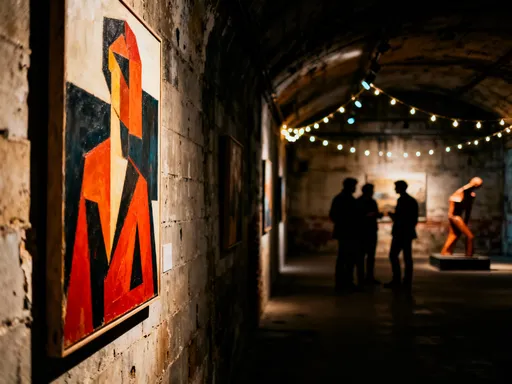
While Lahore’s past is etched in stone, its present and future are expressed through art, music, and performance at venues like the Alhamra Arts Council. Located on Mall Road, this cultural complex is housed in a striking example of brutalist architecture, with geometric concrete forms and shaded walkways that provide relief from the sun. Established in the 1970s, Alhamra has become a cornerstone of Lahore’s contemporary arts scene, hosting theater productions, classical music concerts, art exhibitions, and literary festivals. It is a space where tradition and innovation converge, where a young poet might recite verses in Punjabi one evening and a modern dance troupe performs experimental choreography the next.
The complex includes multiple auditoriums, galleries, and open-air performance spaces, allowing for diverse programming throughout the year. Events like the Lahore Literary Festival attract international authors and thinkers, fostering cross-cultural dialogue. Classical music nights feature renowned vocalists and instrumentalists performing ragas that have been passed down for centuries. Visual art exhibitions highlight both established and emerging Pakistani artists, often exploring themes of identity, heritage, and social change. For locals, Alhamra is more than a venue—it’s a community hub, a place to gather, debate, and be inspired.
Visitors are welcome to attend public events, and tickets are often affordable or free. Checking the schedule in advance is recommended, as performances can fill quickly. Even without attending a show, walking through the complex offers a sense of Lahore’s creative pulse. Murals, sculptures, and impromptu poetry readings in the courtyard reflect a city deeply committed to artistic expression. Alhamra proves that culture is not static—it evolves, challenges, and renews itself. For travelers seeking to understand modern Lahore, a visit here is as essential as any historic site.
Food, Poetry, and Music: Culture Beyond Monuments
To truly know Lahore, one must taste it, listen to it, and feel its rhythm in the soul. While its monuments are breathtaking, the city’s intangible heritage—its food, poetry, and music—is what leaves the deepest impression. The streets come alive at dusk, when food stalls ignite their grills and the aroma of spices fills the night air. Halwa puri, a breakfast staple, is served in bustling eateries where families gather on wooden benches, dipping golden puris into lentil curry and sweet semolina halwa. At Gawalmandi Food Street, a revitalized lane near the Walled City, visitors can sample paye (slow-cooked trotters), kebabs, and falooda, all prepared with generations-old recipes.
But Lahore’s culture is not only tasted—it is heard. The city has long been a cradle of Urdu poetry, and mushairas (poetic symposiums) are still held regularly in parks, cultural centers, and private homes. Poets recite ghazals and nazms, their words weaving themes of love, loss, and longing, while audiences respond with calls of “Wah! Wah!” in appreciation. These gatherings are not performances for tourists; they are heartfelt expressions of a literary tradition that remains vibrant. Similarly, Sufi music at shrines like Data Darbar offers spiritual resonance. Every Thursday night, qawwali singers perform devotional songs that build in intensity, drawing listeners into a state of emotional and spiritual elevation. The music, with its rhythmic clapping and soaring vocals, transcends language, speaking directly to the heart.
These experiences remind us that culture is not confined to museums or guidebooks. It lives in shared meals, in late-night conversations over tea, in the spontaneous laughter of a street performance. For travelers, engaging with Lahore’s living traditions means setting aside rigid itineraries and embracing spontaneity. It means accepting an invitation to a local home, trying a dish you can’t pronounce, or sitting quietly at a shrine to absorb the atmosphere. These moments, unscripted and authentic, are what make a journey memorable. They transform sightseeing into connection, and visitors into temporary members of the community.
Conclusion: Carry Lahore’s Spirit With You
Lahore is not a city you simply visit—you feel it. Its culture is not displayed behind glass but lived in the streets, markets, homes, and hearts of its people. From the grandeur of the Badshahi Mosque to the intimacy of a poetry gathering, from the spice-laden alleys of Anarkali to the quiet reflection at a 400-year-old tomb, Lahore offers a journey through time and tradition that is both educational and emotional. It challenges the notion that heritage is something frozen in the past, showing instead how history can breathe, adapt, and thrive in the present.
The city’s true magic lies in its ability to make visitors feel welcome, not as outsiders, but as guests in a long-standing cultural conversation. Whether savoring halwa puri at dawn, marveling at mirror work in Sheesh Mahal, or listening to qawwali under the stars, one comes to understand that Lahore’s greatness is not in its monuments alone, but in its people’s enduring spirit. It is a place where art, faith, food, and community are inseparable, where every interaction carries the weight of history and the warmth of humanity.
For those who travel with curiosity and respect, Lahore offers more than sights—it offers transformation. It reminds us that the most meaningful journeys are not measured in miles, but in moments of connection. So come with an open heart, walk its streets with wonder, and let the city reveal its hidden treasures. And when you leave, you won’t just carry photographs—you’ll carry stories, flavors, and a piece of Lahore’s soul within you.